

First things first: In New Mexican cuisine, beans are typically served whole, not mashed as refried beans—although there are plenty of places that will serve refries. They have a rich, earthy flavor like nothing else in this world. You have not lived until you’ve had traditional frijoles.
A caveat before we get started: Traditional frijoles are cooked in an olla (no, not that one) which is essentially a clay pot, but I don’t own one and the really good ones cost a damned fortune. So, I used a regular, run-of-the-mill, pot and it turned out fine. I also didn’t have any whole chile pods on hand so I used Red Chile powder instead.
Here’s what you’ll need:
2 Cups Pinto Beans, dry
8 Cups Water
1 Head of Garlic, minced
2 Red Chiles, dried
2 tsp. Epazote (optional—the rumor is that it cuts down on the gas factor)
1 ½ tsp. Salt, or more to taste
Place beans in a heavy saucepan, cover them with water, add the garlic, chiles and optional epazote.
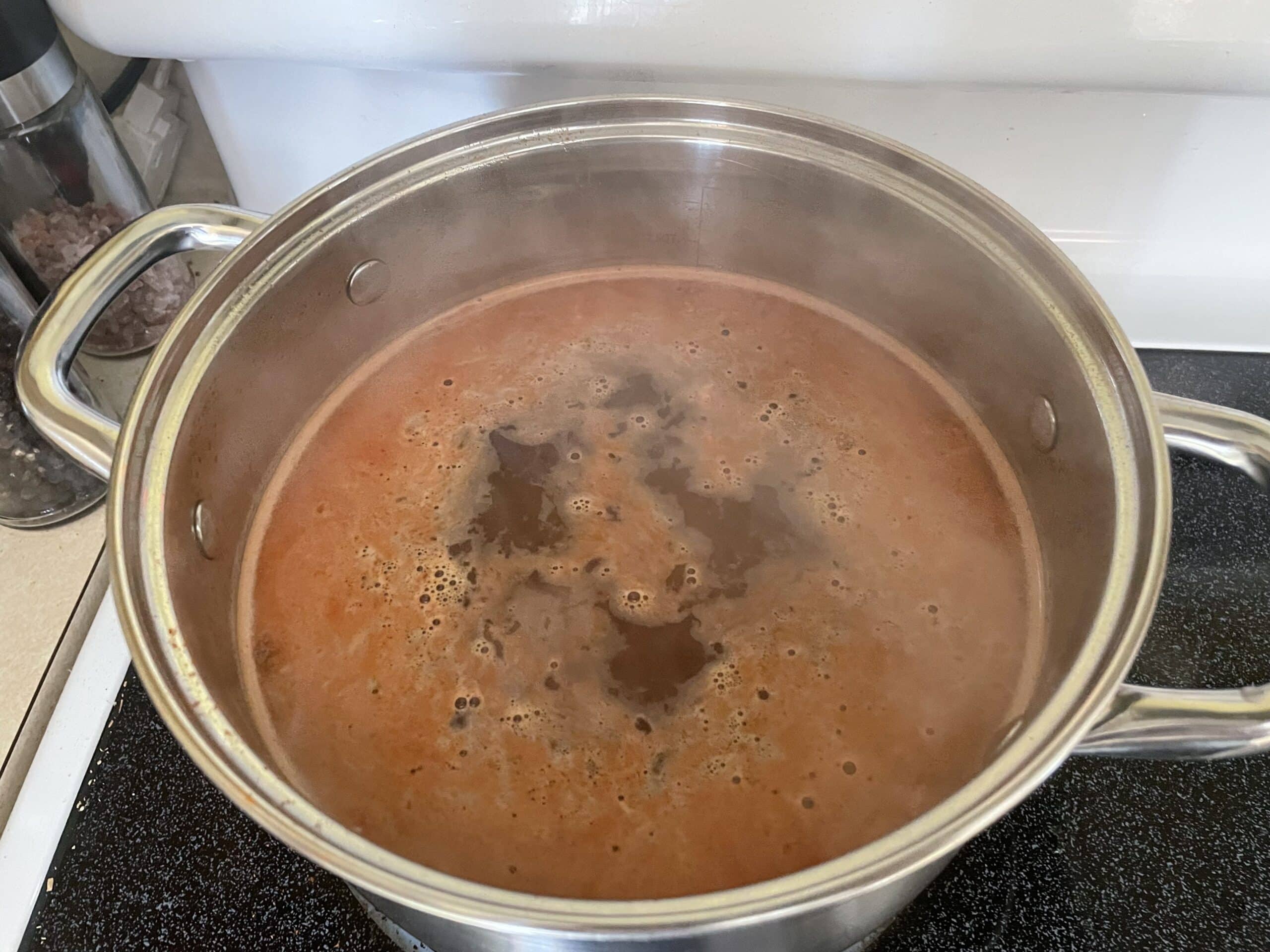
Bring the beans just to a boil over high heat, then reduce the heat to low and simmer the beans, uncovered, for a minimum of 2 ½ hours, but will likely take much longer. There’s an old saying that goes, “there is nothing like a slow fire.” Do not try to rush this process, or you will be sorry. A low heat is best to allow the flavors to develop and to allow the beans to hold together while transforming into a creamy texture. If you try to rush the process, then the beans will fall apart and you might as well just have bought a fucking can of Old El Paso. No, soaking the beans ahead of time will not help—in fact, it will only serve to leech out the flavor.
After one hour, stir the beans up from the bottom and check the water level. If there is not at least an inch more water than the level of beans, then add enough hot water to bring it up to that level. Check the beans after another 30 minutes, repeating the process. Add the salt after the beans are well softened and continue simmering. Check every 15 minutes, making sure the beans don’t dry out, until there is only a little liquid left. The beans should not be watery.
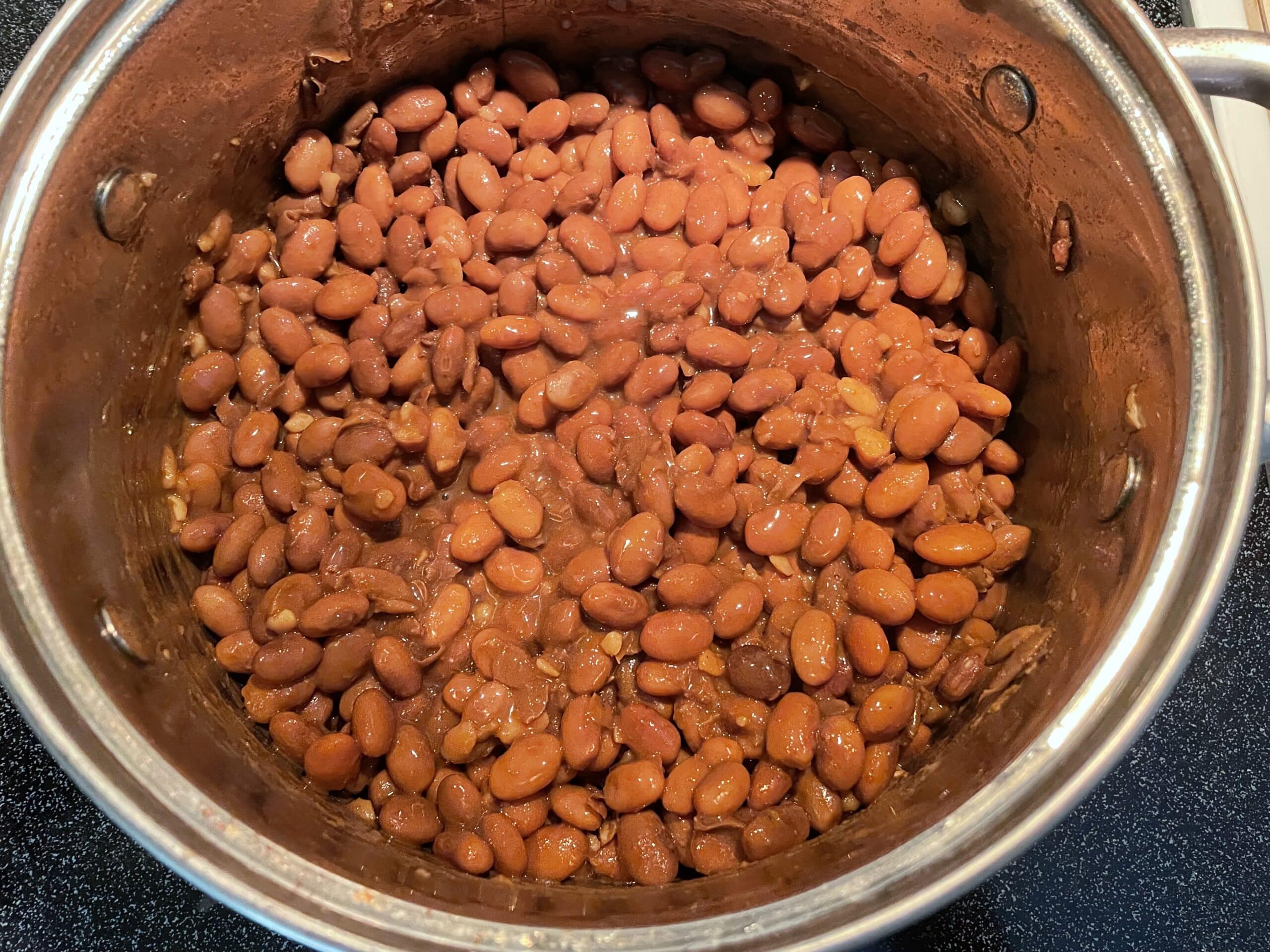
Serve as a side dish with pretty much anything. These get better as leftovers the next day.


That looks great. I’m guessing a decent slow cooker that doesn’t go through a lot of big ups and downs of temps would work well.
I’d never heard of epazote before. Looking it up, it sounds fairly potent tasting, although I’d guess that like the garlic the flavor would fade into the background over all that time.
A slow cooker might work but you still have to babysit it to mind the water level. If it’s not a set and forget thing then I tend to stick with the stove.
I will eat a big mess of frijoles. My favorites are made with black beans.
And for me, the toots are a feature, not a bug.
Exactly what a gentleman farm owner would say.
I had to look up epazote as well, and one recipe had this to say about the timing of it:
So it sounds like some experimentation might be in order!
Vegetarian for the win!